
Microsoft Outlook tutorials

Outlook 2010: How to Minimize or Disable the People Pane

Contributed by shamanstears on November 19, 2009 under Microsoft Outlook

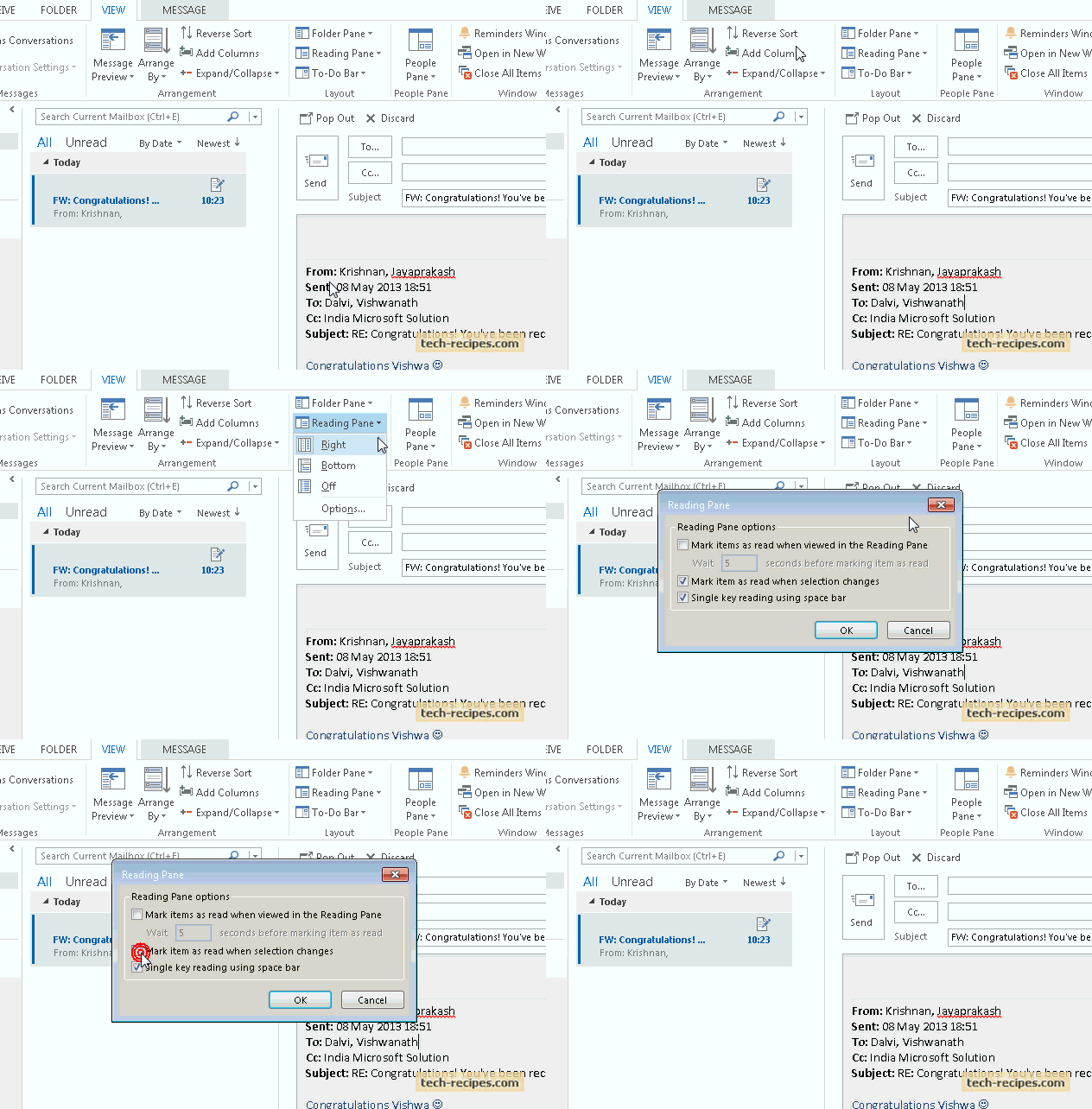
The People Pane appears beneath the Reading Pane in the main window (and in all item windows). It displays thumbnail images for each person associated with the selected item and allows you to quickly access the status updates, appointments, attachments, emails, and activities for that person. It does take up a large amount of screen real estate, so your preference may be to minimize or completely disable this functionality.

Comments
 

Outlook 2010: Download Images Automatically

Contributed by shamanstears on November 14, 2009 under Microsoft Outlook

Outlook prevents the automatic download of pictures in email messages as a security measure to help prevent possible spamming. It permits images from sites in your Trusted Zone to show but blocks all others. You can override this feature by following this tech recipe:

Comments
 

Outlook 2010: How To Create a Signature for Each Account

Contributed by shamanstears on September 1, 2009 under Microsoft Outlook

In Outlook 2010, you can create signatures and assign a different one to each of your Outlook accounts. You can also create multiple signatures for different uses, such as business e-mail, personal e-mail, etc.

Comments
 

Outlook 2010: How to Create a New Outlook Data File (PST)

Contributed by shamanstears on August 30, 2009 under Microsoft Outlook

If you wish to create a personal folder for storing Outlook items on your computer, you need to find where Microsoft has hidden the option in the new version of Outlook.Here are the steps to take to create a new Outlook data file quickly and easily.

Comments
 

Outlook 2010: Prevent Other Outlook Recipients from Forwarding, Printing, or Copying Content from Your Message

Contributed by shamanstears on August 24, 2009 under Microsoft Outlook

If you are sending out an email message to a contact and prefer that it isn’t forwarded to someone else, printed, or any of the content copied, Outlook 2010 allows you to do this by following these steps.

Comments
 

Outlook 2010: Enable Blind Carbon Copy (BCC)

Contributed by shamanstears on August 17, 2009 under Microsoft Outlook

If you are sending an email out to a few people or a mailing list, you probably are wanting to hide the list of addresses from each recipient. You do this by using the blind carbon copy field in the message you are creating. Outlook has this field hidden by default, to unhide the field, follow these steps.

Comments
 

Outlook 2010: Empty Deleted Items When Exiting

Contributed by shamanstears on August 10, 2009 under Microsoft Outlook

If you are worried about your Deleted Items folder becoming overly large, you can configure Outlook to automatically empty the Deleted Items folder whenever you exit the Outlook application. This comes in especially handy when you have size limits on how large your inbox can be.

Comments
 

Outlook 2010: Show Inbox (Calendar or Tasks) When The Application Starts

Contributed by shamanstears on under Microsoft Outlook

By default, Outlook shows the Inbox when the application is launched. You may want to have it open up to your Calendar or Tasks (or possibly Contacts, Notes, Journal, or other folder). You can change the default opening folder and have the information you need when you open Outlook by following these steps.

Comments